
Volatility-Based Stock Trading System Captures Profits From Normal Stock Price Fluctuations!
Introducing a stock trading system unlike anything you've seen before.
In the next few minutes, you will discover how Tactical Trading:
- Computes your projected profit before the first trade is placed.
- Calculates precise buy and sell prices based on a stock's normal daily trading range.
- After every completed trade, Tactical Trading recalculates your next buy and sell orders.
- Continues generating every buy and sell order until the projected profit is realized.
Tactical Trading uses normal stock price volatility to determine your next move, in advance
With Tactical Trading there is no need to be tethered to your computer monitor!
No market timing, no stress about exiting the trade at the perfect moment.
No buy, hold, and hope.
When a trade fills, simply enter it into Tactical Trading and get your next limit orders. No guesswork required. No having to watch your position tick by tick.
Free Premium Access for Providing Feedback.
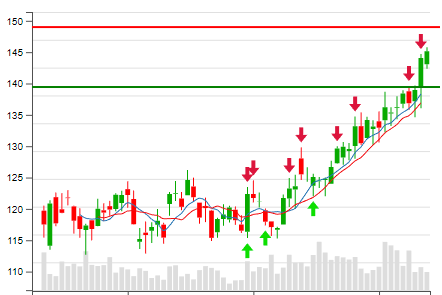
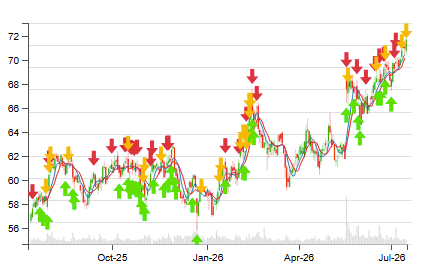
Click For Explainer
Results Using Most Recent Three Months Of Price Data:
| Tactical Trading % Return: 1000% | TT Annualized % Return: 1000% |
| Buy and Hold % Return: 1000% | BH Annualized % Return: 1000% |
| Number Of Completed Cycles: 100 |
Tactical Trading uses a stock's normal daily trading range volatility
to determine where to buy and where to sell.
Tactical Trading uses an exact mathematical algorithm that delivers
consistent results every time, not just a percentage of the time.
Tactical Trading uses an exact mathematical algorithm that delivers
consistent results every time, not just a percentage of the time.
The Tactical Trading System is a unique methodology that incorporates principles familiar to users of dollar-cost averaging, swing trading, and trend analysis—without relying on market prediction.
The Tactical Trading System includes features similar to dollar-cost averaging, swing trading, and trend analysis, offering surprising ease of use and powerful profit potential.
The Tactical Trading System includes features similar to dollar-cost averaging, swing trading, and trend analysis, offering surprising ease of use and powerful profit potential.
Free Premium Access for Providing Feedback.
Tactical Trading works on all stocks at all times, Here's how:
Tactical Trading works on all stocks at all times, Here's how:
Here's how Tactical Trading works:
Every Tactical Trading cycle begins with three user-defined parameters:
- A Cycle Series
- Shares Per Series
- A Trade Range
From those three inputs, Tactical Trading calculates your initial buy and sell limit orders. Whenever one order fills, the algorithm immediately calculates the next order, guiding you through the entire trade cycle until completion.
Behind the scenes, these calculations are performed by a tempered martingale algorithm based on a numerical cancellation system. While this example focuses on stock trades, the system is also effective for ETFs, options, futures, and crypto.
Walk Through a Complete Tactical Trading Cycle In Five Minutes...
The core of the Tactical Trading System is the tempered martingale algorithm which provides an exact solution to a two-occurrence random walk, though randomness is not a requirement for Tactical Trading. The algorithm operates by manipulating a numerical series generally referred to as a "Cancellation System". While this example focuses on stock trades, the system is also effective for ETFs, options, futures, and crypto.
There are three main components to the Tactical Trading system: a numerical series called the "Cycle Series," a share multiplier known as the "Shares Per Series," and the "Trade Range," which is the dollar price move required to trigger a buy or sell order.
No Action (NA) at $11
Buy 100 at $9 Limit
Buy 500 at $10
L - Buy 100 at $9
1, 2, 3, 4
1, 2, 3, 4, 5
500
600
If Win Own 600
If Loss Own 700
No Action (NA) at $10
Buy 100 at $8 Limit
Buy 500 at $10
L - Buy 100 at $9
W - NA at $10
1, 2, 3, 4
1, 2, 3, 4, 5
2, 3, 4
500
600
600
If Win Own 300
If Loss Own 800
Sell 300 at $11 Limit
Buy 200 at $9 Limit
Buy 500 at $10
L - Buy 100 at $9
W - NA at $10
W - Sell 300 at $11
1, 2, 3, 4
1, 2, 3, 4, 5
2, 3, 4
3
500
600
600
300
If Win Own 0
If Loss Own 600
Sell 300 at $12 Limit
Buy 300 at $11 Limit
Buy 500 at $10
Buy 100 at $9
No Action at $10
Sell 300 at $11
Sell 300 at $12
1, 2, 3, 4
1, 2, 3, 4, 5
2, 3, 4
3
Cycle Ends
500
600
600
300
0
-5000
-900
0
+3300
+3600
-5000
-5900
-5900
-2600
+1000
No Action (NA) at $11
Buy 100 at $9 Limit
Buy 500 at $10
L - Buy 100 at $9
1, 2, 3, 4
1, 2, 3, 4, 5
500
600
If Win Own 600
If Loss Own 700
No Action (NA) at $10
Buy 100 at $8 Limit
Buy 500 at $10
L - Buy 100 at $9
W - NA at $10
1, 2, 3, 4
1, 2, 3, 4, 5
2, 3, 4
500
600
600
If Win Own 300
If Loss Own 800
Sell 300 at $11 Limit
Buy 200 at $9 Limit
Buy 500 at $10
L - Buy 100 at $9
W - NA at $10
W - Sell 300 at $11
1, 2, 3, 4
1, 2, 3, 4, 5
2, 3, 4
3
500
600
600
300
If Win Own 0
If Loss Own 600
Sell 300 at $12 Limit
Buy 300 at $11 Limit
Buy 500 at $10
Buy 100 at $9
No Action at $10
Sell 300 at $11
Sell 300 at $12
1, 2, 3, 4
1, 2, 3, 4, 5
2, 3, 4
3
Cycle Ends
500
600
600
300
0
-5000
-900
0
+3300
+3600
-5000
-5900
-5900
-2600
+1000
Buy 500
at $10
No Action (NA) at $11
Buy 100 at $9 Limit
If Win Own 600
If Loss Own 700
No Action (NA) at $10
Buy 100 at $8 Limit
Buy 500
at $10
W - NA
at $10
If Win Own 300
If Loss Own 800
Sell 300 at $11 Limit
Buy 200 at $9 Limit
Buy 500
at $10
If Win Own 0
If Loss Own 600
Sell 300 at $12 Limit
Buy 300 at $11 Limit
Buy 500
at $10
Buy 100
at $9
No Action
at $10
Sell 300
at $11
Sell 300
at $12
Free Premium Access for Providing Feedback.
Supercharge Your Trading Strategy
- Use your preferred research method to choose a stock to trade. Tactical Trading takes over from there.
- The system will analyze your stock for near term trading range volatility and determine the expected "daily price move".
- Simulate how the Tactical Trading System would have performed in the past using the expected daily move and compare profits to the buy and hold strategy.
- When back testing, the expected daily move ("trade range") can be manually adjusted to find the optimal trade range profit, or use the auto-optimization tool to compare the profitability of up to ten variations of the trade range.
- The Trade range determines what the next price targets are to trigger a buy or sell. Trade Range can be increased or decreased to control the frequency of trading activity you are comfortable with.
- Setting up a stock to trade allows you to adjust the amount of your initial investment, and how many shares to trade in the system.
- The expected profit at system completion is known before entering the first trade. The profit amount is fixed regardless of the share price.
- Execute the first trade as directed and enter the fill into the system. Two limit orders are then generated, a buy and a sell.
- When one of the two limit orders is filled enter the number of shares and the price into the system. Two more limit orders are created.
- Continue through the cycle until all shares have been sold and the cycle is complete.
- Tactical Trading is really that simple, and automatic!
All subscription levels include
- Demo module to learn the basics of the system and gain confidence in choosing the right setup.
- Database of pre-screened stocks selected to work well with Tactical Trading, giving you a head start on your research. Updated weekly.
- Advanced volatility analysis to identify stocks well suited for Tactical Trading.
- Manual simulation (back testing) which walks through price history and helps discover the ideal system parameters.
- Simulation optimizer to automatically test multiple variations of the system parameters to find the most profitable combination. See how Tactical Trading profits compare to the typical buy and hold strategy.
- Full suite of trading tools to set up your stock selections and track your positions, trade history and profitability.
- Personalized dashboard to monitor the status of your positions, current profitability and important details.
- Full documentation, training and video tutorials.
- Access to a complete knowledge base, glossary and FAQs.
- A moderated forum for discussion with other members, plus a support ticket system.
- Tactical Trading continues to evolve with new features and enhancements based on member feedback and ongoing development.
Supercharge Your Trading Strategy
- Use your preferred research method to choose a stock to trade. Tactical Trading takes over from there.
- The system will analyze your stock for near term trading range volatility and determine the expected "daily price move".
- Simulate how the Tactical Trading System would have performed in the past using the expected daily move and compare profits to the buy and hold strategy.
- When back testing, the expected daily move ("trade range") can be manually adjusted to find the optimal trade range profit, or use the auto-optimization tool to compare the profitability of up to ten variations of the trade range.
- The Trade range determines what the next price targets are to trigger a buy or sell. Trade Range can be increased or decreased to control the frequency of trading activity you are comfortable with.
- Setting up a stock to trade allows you to adjust the amount of your initial investment, and how many shares to trade in the system.
- The expected profit at system completion is known before entering the first trade. The profit amount is fixed regardless of the share price.
- Execute the first trade as directed and enter the fill into the system. Two limit orders are then generated, a buy and a sell.
- When one of the two limit orders is filled enter the number of shares and the price into the system. Two more limit orders are created.
- Repeat until all shares are sold. The expected profit will be realized.
- Tactical Trading is really that simple, and automatic!
All subscription levels include
- Demo module to learn the basics of the system and gain confidence in choosing the right setup.
- Database of pre-screened stocks, specifically selected to work well in the Tactical Trading System. Gives you a jumpstart in your stock research. Updated weekly.
- Advanced volatility analysis to uncover stocks that will perform well when tactically traded
- Manual simulation (back testing) which walks through price history and helps discover the ideal system parameters.
- Simulation optimizer to automatically test multiple variations of the system parameters to find the most profitable combination. See how Tactical Trading profits compare to the typical buy and hold strategy.
- Full suite of trading tools to set up your stock selections and track your positions, trade history and profitability.
- Personalized dashboard to monitor the status of your positions, current profitability and important details.
- Full documentation, training and video tutorials.
- Access to a complete knowledge base, glossary and FAQs.
- A moderated forum for discussion with other members, plus a support ticket system.
- Complete user profile showing account details, subscription status and payment history. Your subscription level can be changed at any time.
- Tactical Trading is periodically adding new features and continually monitoring and updating present functionality.
Free Premium Access for Providing Feedback.
Everything you need to set up, simulate, execute, and monitor Tactical Trading cycles is integrated into one easy-to-use platform.
Included are a complete set of tools designed to help you effectively set up, trade, and monitor your orders and positions for maximum profit.
Cycle Trainer
Cycle Trainer
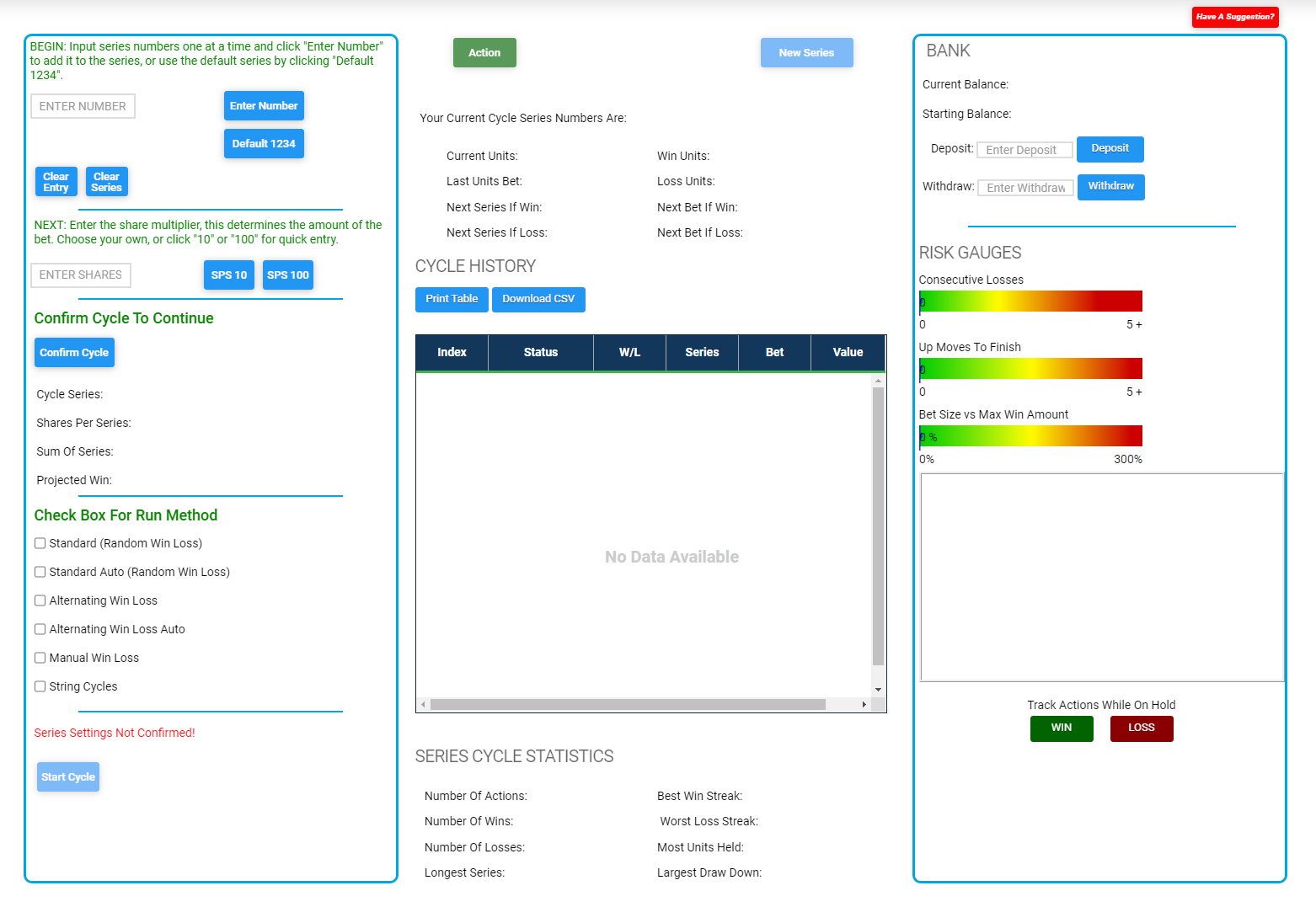
The Cycle Trainer module helps you master the core of the Tactical Trading algorithm, the 'Cycle Series.' You can experiment with various number combinations until you feel confident in selecting a series that aligns with your trading style and profit goals.
The Cycle Trainer allows you to run cycles on random win/loss patterns, alternating win/loss sequences, or manually input win/loss outcomes.
DEMO
DEMO
The Demo module helps you master the martingale algorithm, or 'Cycle Series.' You can experiment with various number combinations until you feel confident in selecting a series that aligns with your trading style and profit goals.
The Demo allows you to run cycles on random win/loss patterns, alternating win/loss sequences, or manually input win/loss outcomes.
Volatility Analysis
Volatility Analysis
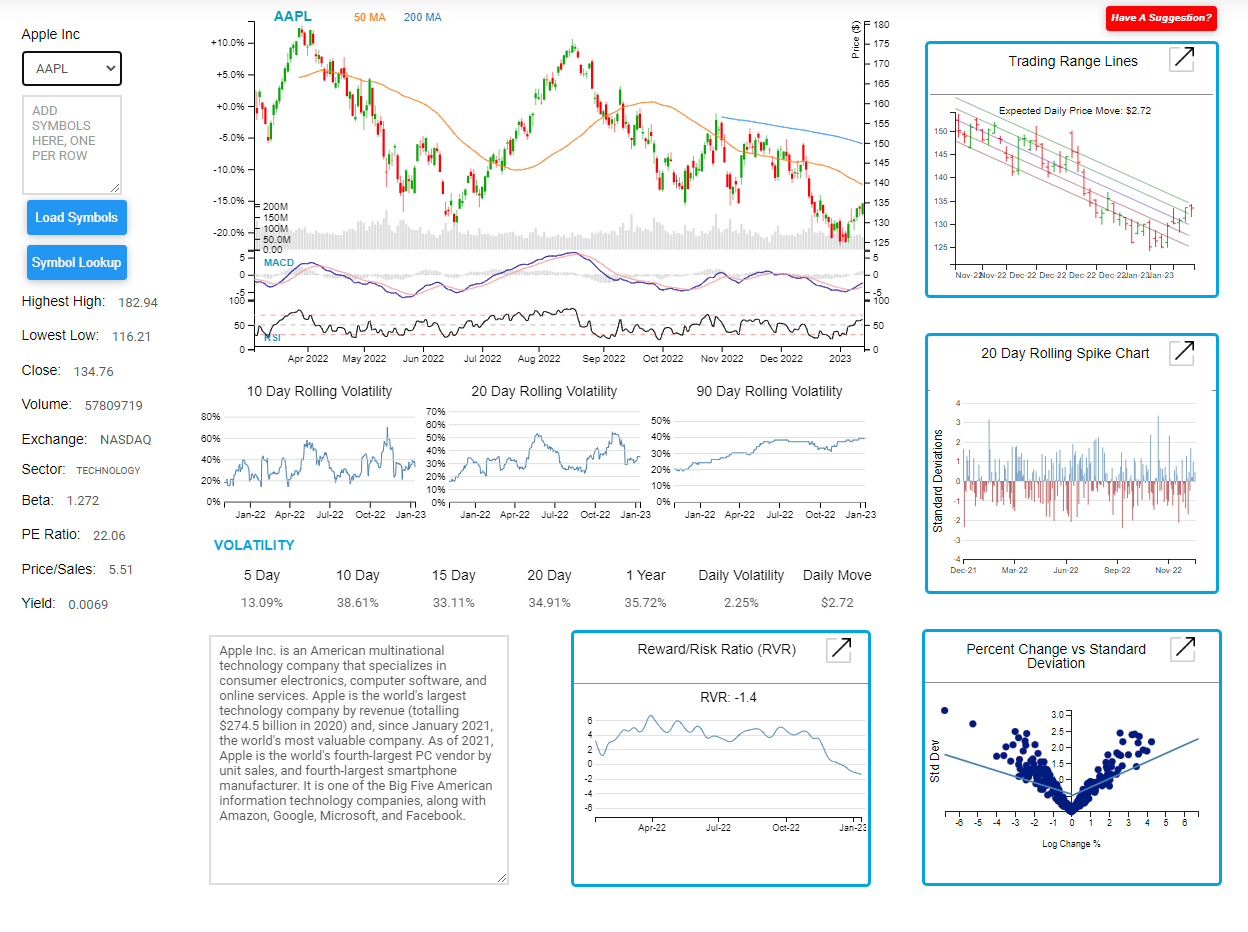
Volatility is the cornerstone of profitability with the Tactical Trading System. Our advanced volatility analysis tools offer a clear view of a stock’s volatility across multiple time frames.
Here, you'll find charts that highlight unusual price spikes, a risk scatterplot, and our proprietary '5-Lines' linear regression. Over time, you’ll become adept at interpreting these visuals to determine if a stock is suitable for Tactical Trading.
Additionally, we provide a calculation of the stock's 'expected daily move,' which helps define the ideal Trade Range within the system.
Another proprietary indicator, the RVR (Reward vs Risk), evaluates whether a stock’s volatility aligns with its return performance, helping you assess the stock's profit potential.
Simulation
Simulation
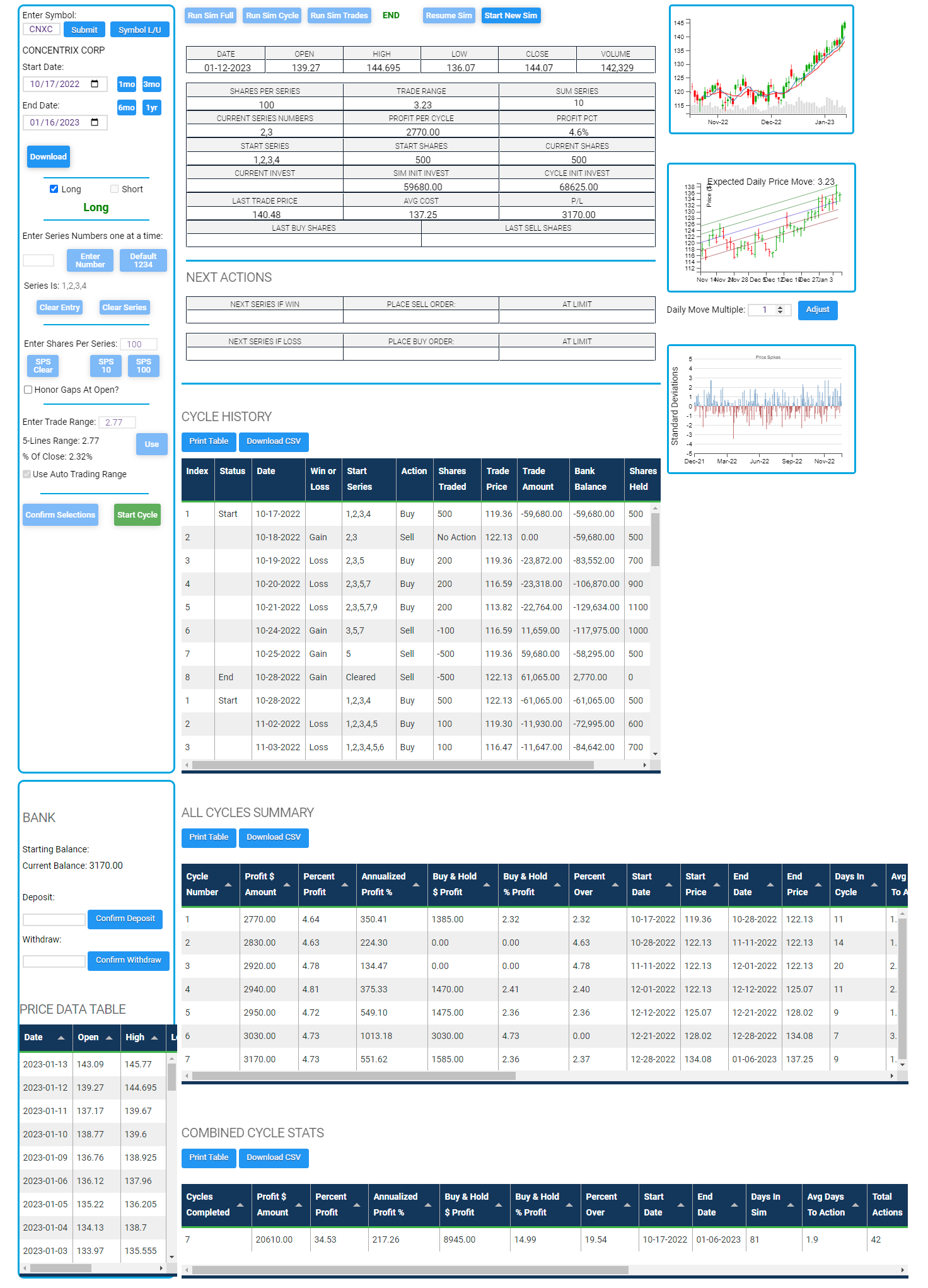
This module lets you simulate how the Tactical Trading System would have performed based on your selected cycle parameters.
You can choose any time frame and adjust series numbers, shares per series, and trade range.
The simulation can run trade by trade or automatically over your chosen time frame.
It’s an excellent tool for testing the system through various price patterns to assess how well Tactical Trading would have performed.
Also included is the Simulation Optimizer, which runs multiple simulations to identify the most profitable Trading Range.
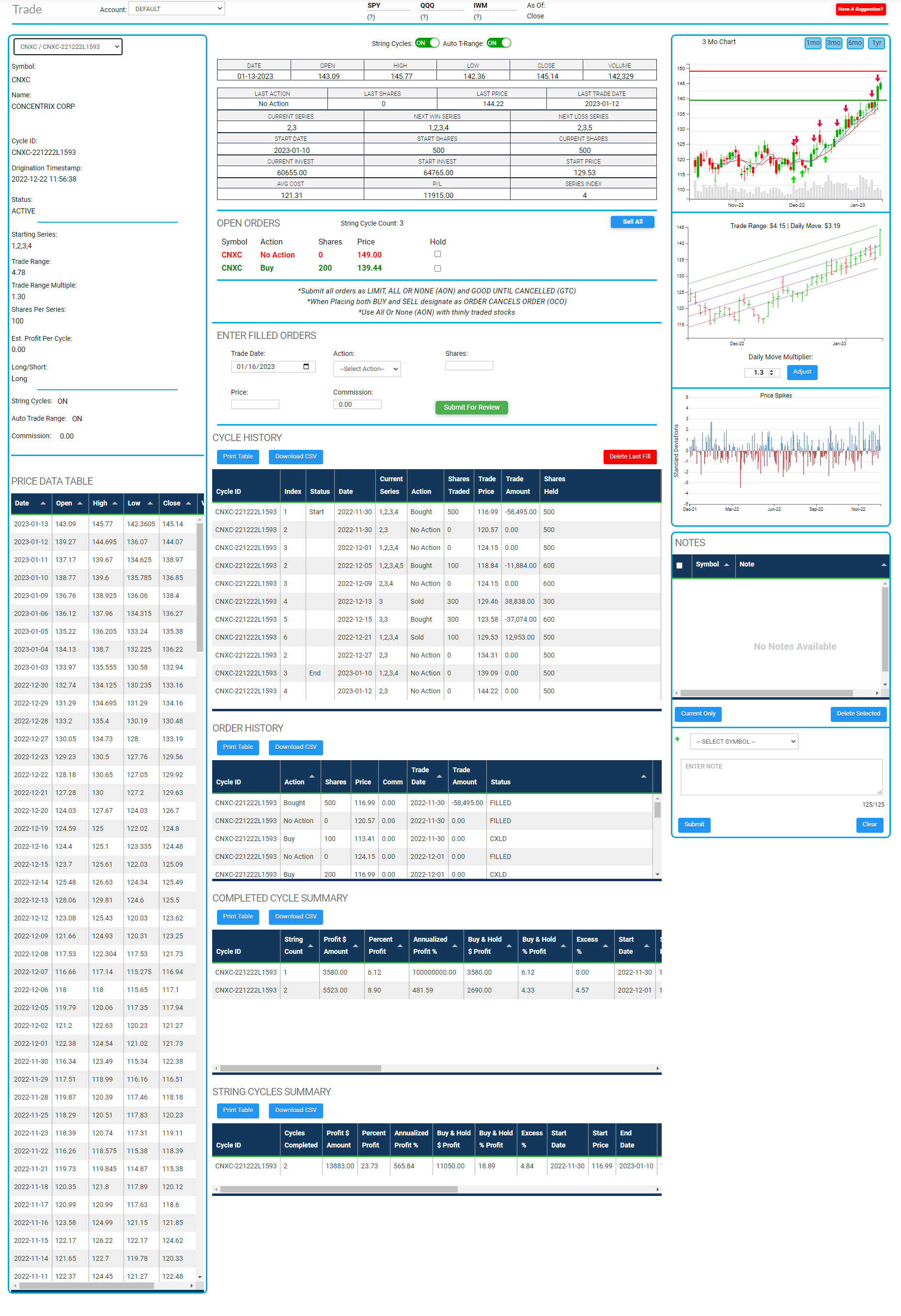
Trade
Trade
This is where you'll spend the majority of your time interacting with the Tactical Trading System. Here, you'll input your trade executions and receive the next set of orders.
In the 'Cycle Setup' module, you’ll have already selected the cycle parameters that now guide your trades in the Trade Module.
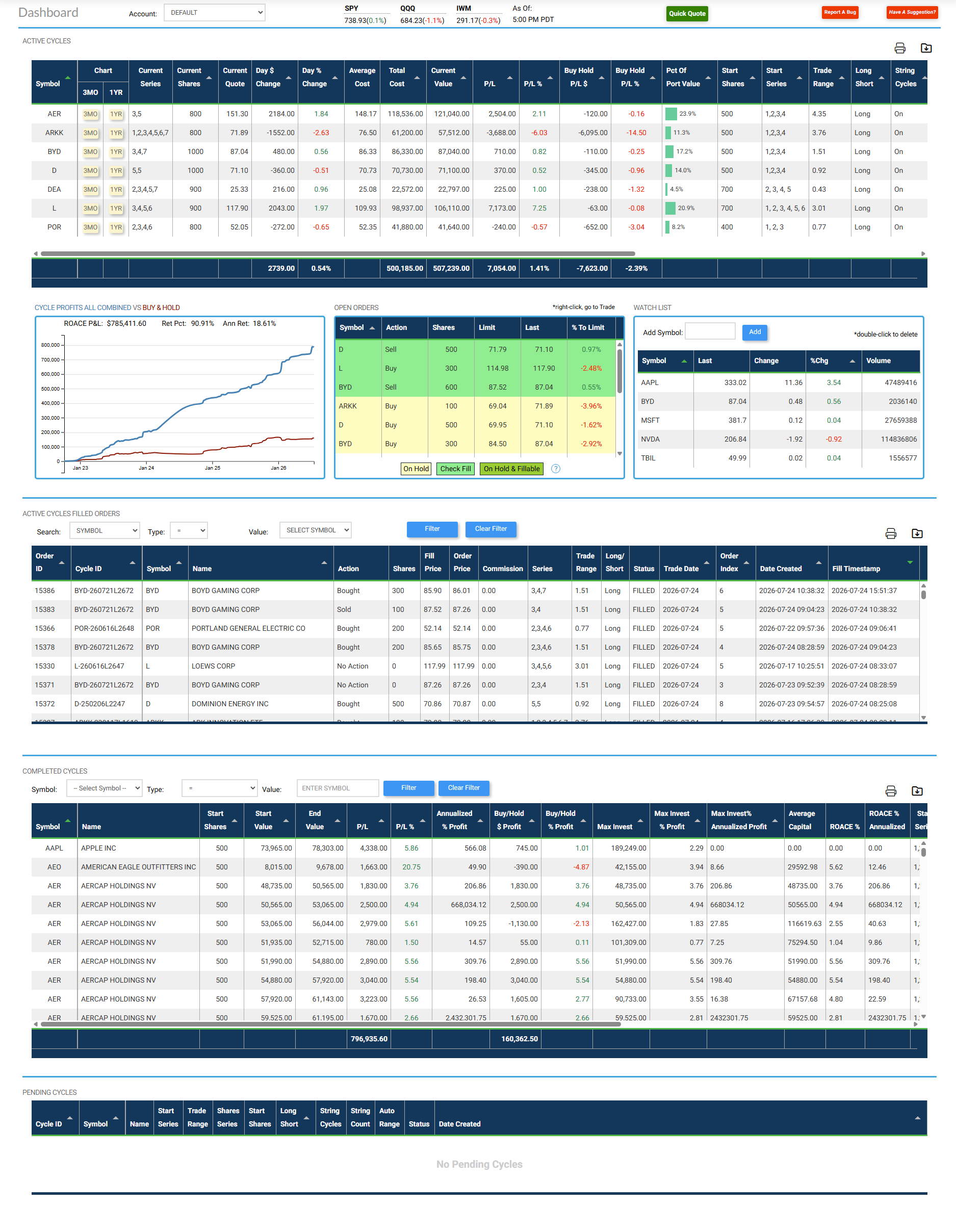
Dashboard
Dashboard
The 'Dashboard' is your central control room. Here, you'll find tables displaying all active and completed cycles, with profit and loss tracked for each.
All open orders are clearly listed, and the watch list allows you to monitor and receive updates on stocks you consider potential candidates for the system.
This is also where you'll find communication tools, including recent forum posts, feature requests, and announcements of important system upgrades.
You just entered a trade... Now You Know your next move!
Beat the Market, Mathematically: Achieve Consistent Profits with a Trusted, Data-Driven Stock Trading System
Beat the Market, Mathematically:
Achieve Consistent Profits with a Trusted,
Data-Driven Stock Trading System
Markets will continue moving whether you're watching them or not. Tactical Trading gives you a disciplined plan before you place your first trade. When a trade requires your attention, simply enter the fill and receive your next buy and sell instructions.
Spend less time wondering what to do—and more time living your life.
Start Your 14-Day Free Trial!
See Tactical Trading in Action!
Qualified applicants receive complimentary Premium access
in exchange for helping us improve the Tactical Trading App.
Samples Of Recently Concluded System Cycles